.svg)

One of the things I was most excited about before this trip was sharing part of it with Wyatt. On Friday, 10/23/26, that finally happened.
Wyatt arrived right on schedule aboard Delta Flight 633 into Quito International Airport at 7:00 p.m. After traveling all day, he somehow managed to do what Wyatt always seems to do: make friends. He ended up sharing a taxi into the city with another traveler from his flight and arrived at Secret Garden Hostel around 8:00 p.m.
There may be friendlier people in the world than Wyatt, but I haven't met them.
After an enthusiastic reunion in a foreign country, we did what any hungry travelers would do: we found a local eatery and proceeded to eat as much Ecuadorian food as we could possibly fit into our bodies. Best of all, dinner cost just $3.75 each. Every day in Ecuador continues to remind us how far a dollar can go when you're willing to travel a little differently.

Taking Our Time in Quito
The next day, we made a decision that has become one of our favorite parts of this adventure:
We weren't in a hurry.
Rather than rushing south toward our climbing objectives, we spent another day wandering Quito. Since I had already spent several days there and Wyatt had visited on a previous spring break trip, we had enough familiarity to explore without feeling rushed.
We visited a museum, spent time in a beautiful flower garden, and stopped at a gear rental shop where I picked up mountaineering boots for the bigger climbs ahead.
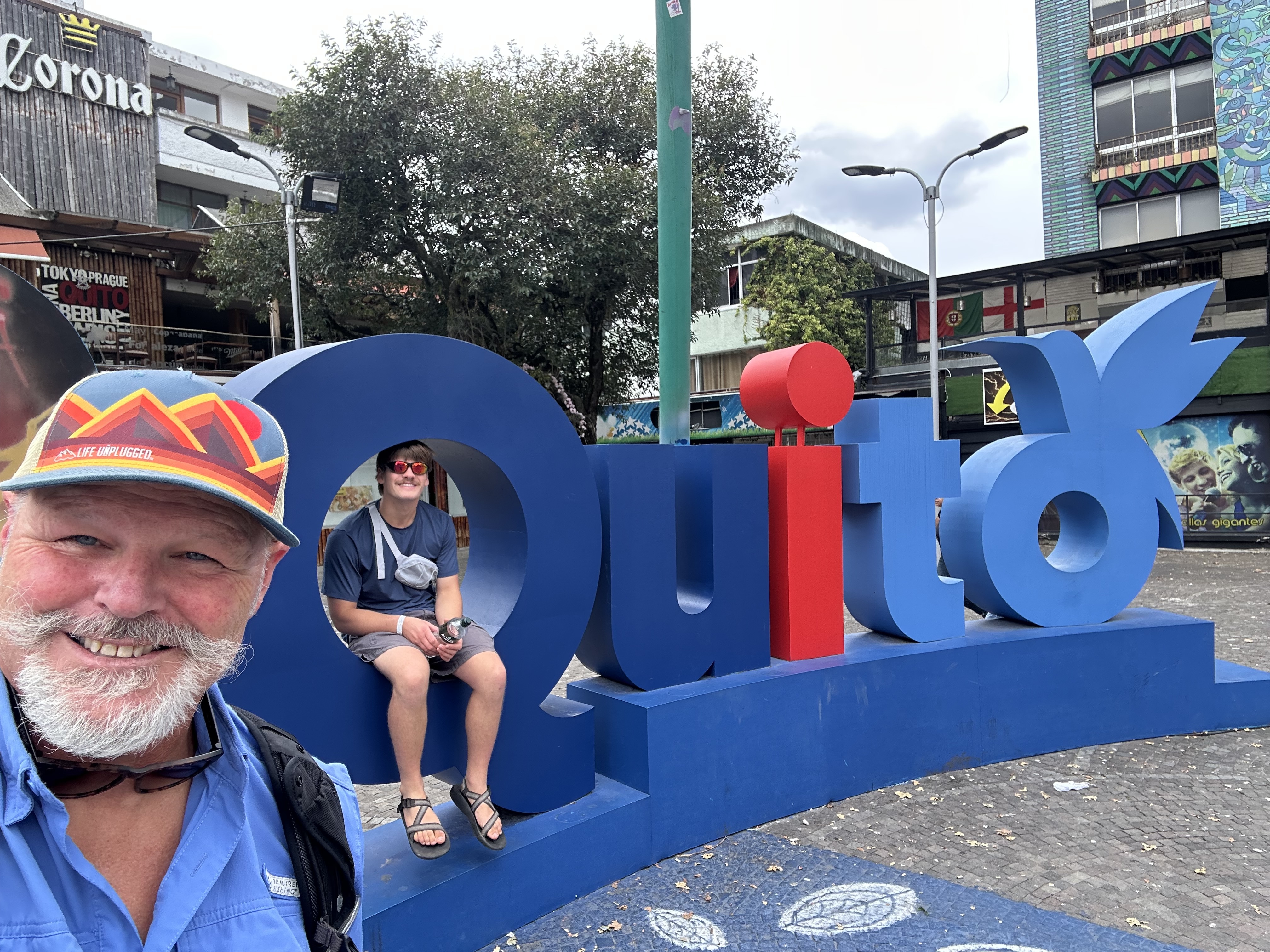
Eventually, we checked out of Secret Garden and began making our way south.
And I have to pause for a moment to talk about Quito's subway system.
I've traveled in a lot of countries and ridden a lot of underground rail systems. Quito's Metro may honestly be the cleanest, most modern, and most impressive I've ever experienced. It was fast, efficient, spotless, and incredibly affordable. Let's just say it made a certain famous underground system in London look a little dated.
From the Metro, we connected to Quito's main bus terminal and boarded a bus bound for Latacunga.
Transportation for Less Than Six Dollars
The bus ride took about an hour and a half as we traveled south through Ecuador's highlands.
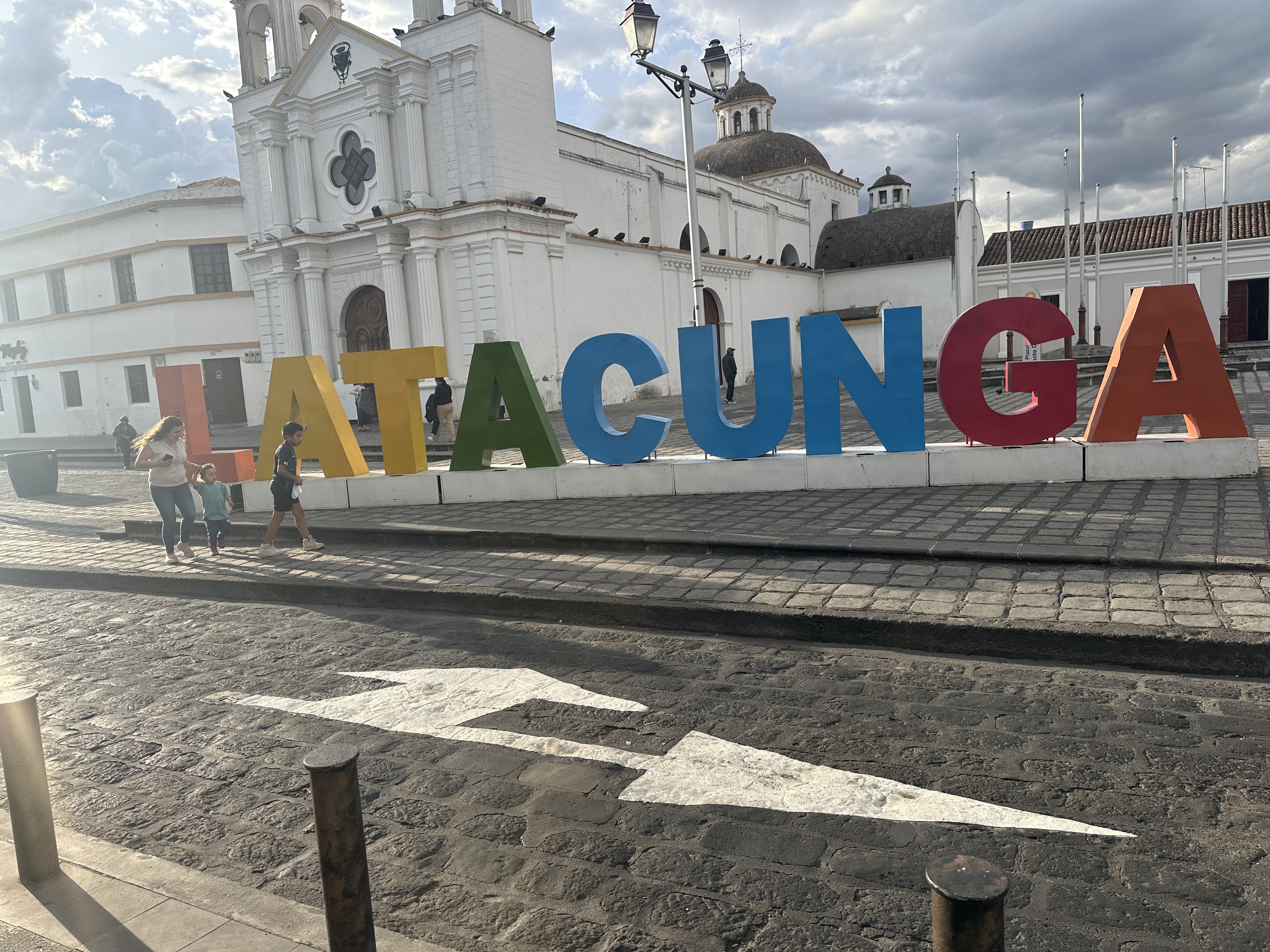
As we got off in Latacunga, two fellow international travelers asked if we'd like to share a taxi. Seconds later, four backpackers were piled into one cab headed toward our next destination: Hostel Café Tiana.
The entire journey included:
- Taxi from Secret Garden to the Metro
- Metro ride across Quito
- Bus to Latacunga
- Shared taxi to our hostel
Total cost?
Just $5.75 per person.
As a camp director who spends a lot of time helping families plan adventures, that number still amazes me.
Hostel Café Tiana became our home base for the next several days. Ironically, it doesn't actually have a café, but it does serve an incredible breakfast for $3.50 that includes unlimited coffee and tea, which is basically all mountaineers really need anyway.
Meeting Our Guide
The following morning started early.
At 6:30 a.m., we met with the owner of Café Tiana, who had helped arrange our climbing logistics. After gathering the additional mountaineering gear we'd need, we met our guide, Julián.
From the moment we met him, we knew we were in good hands.
After reviewing the day's plan, we loaded our gear into his Toyota Land Cruiser and headed south toward the Iliniza Ecological Reserve.
About ninety minutes later, we arrived at the trailhead for our first major climbing objective together:
Iliniza Norte.
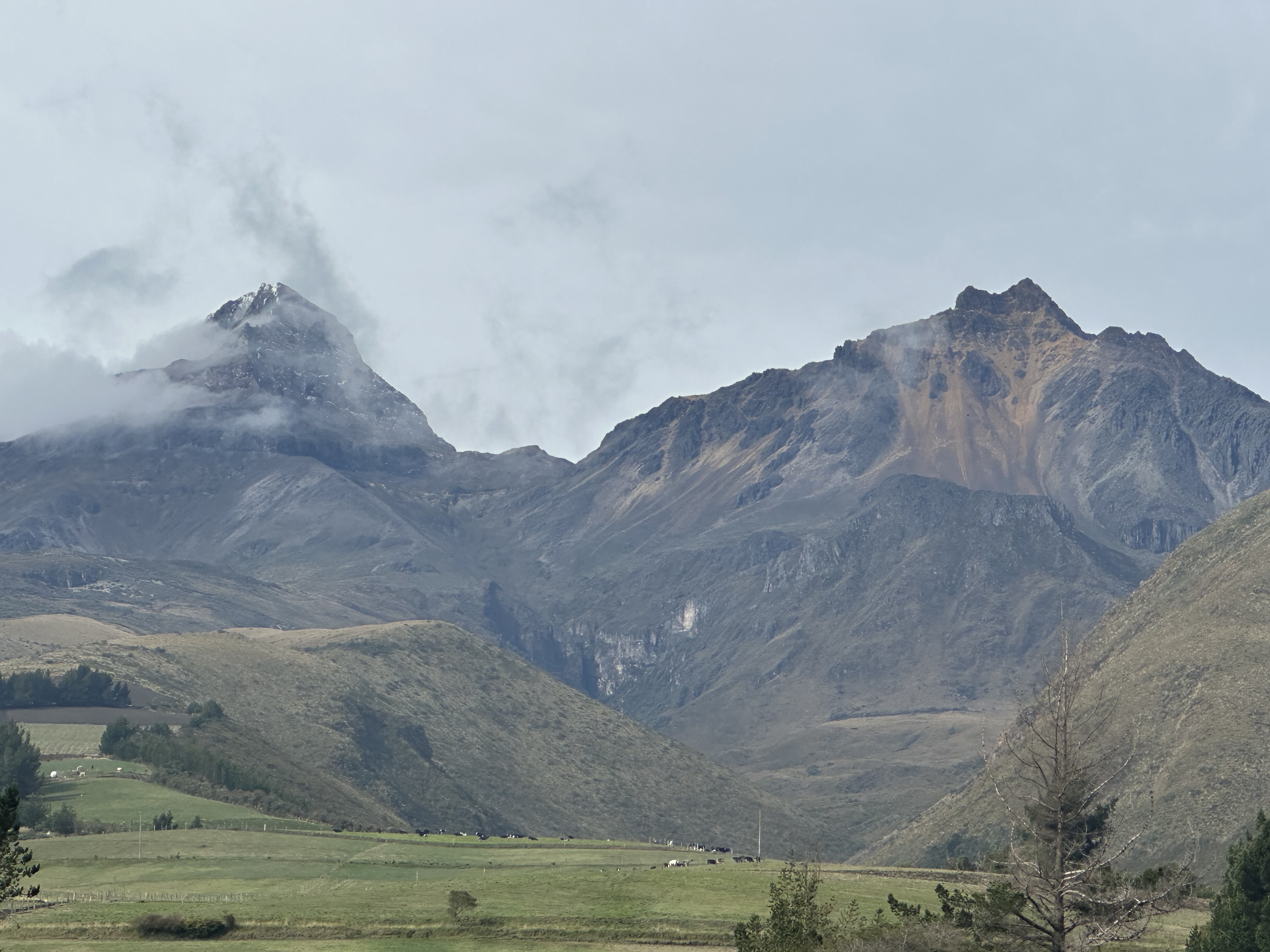
Climbing Iliniza Norte (16,818 Feet)
At 16,818 feet, Iliniza Norte is often considered one of Ecuador's best introductory mountaineering peaks and one of the perfect preparation climbs for larger objectives like Cotopaxi and Chimborazo.
"Preparation climb" sounds nice on paper.
In reality, it still means climbing a big mountain.
The route begins high in the Andes and steadily gains elevation toward the rugged volcanic summit. While Iliniza Norte does not require advanced glacier travel skills, it demands fitness, determination, and a willingness to keep moving when your lungs remind you exactly how thin the air is above 16,000 feet.
As we climbed, the views continued to get bigger.
The famous Avenue of the Volcanoes stretched across the horizon. Massive peaks rose in every direction. Clouds drifted through valleys thousands of feet below us. Every turn revealed another postcard-worthy scene.
One of the things I love about mountaineering is how simple life becomes.
Eat.
Drink.
Take another step.
Repeat.
For hours
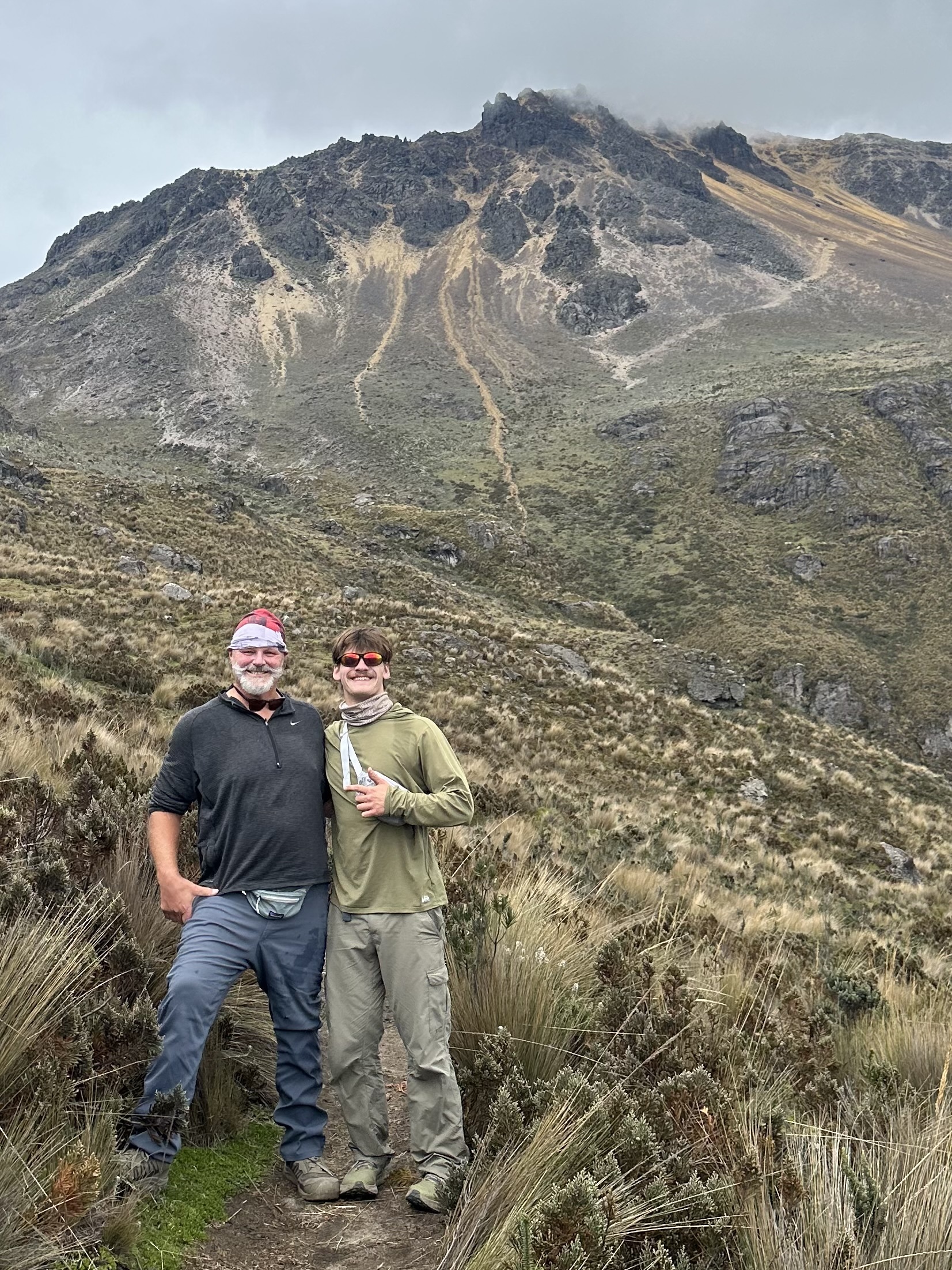
The higher we climbed, the more the mountain demanded our attention. Sections of scrambling over volcanic rock required careful footwork and focus. Every gain in elevation felt earned.
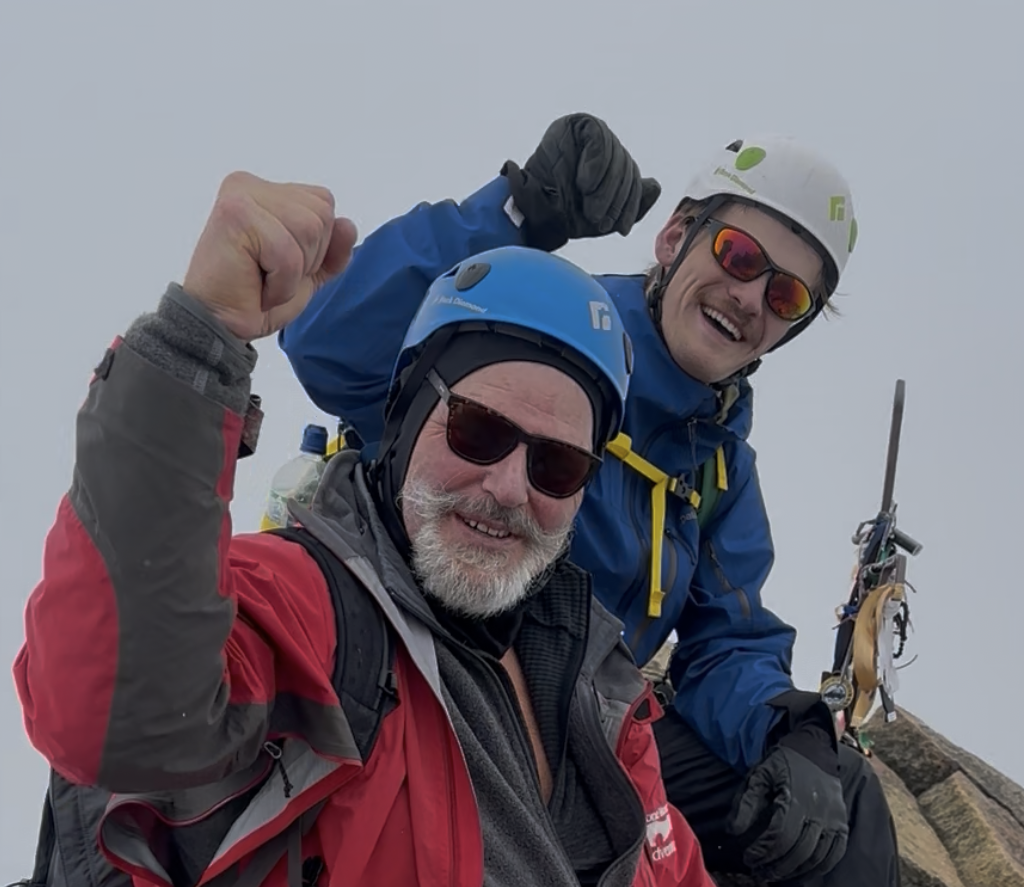
And then, after a long climb, we stood on top.
At 16,818 feet above sea level, the summit delivered exactly what we'd hoped for: incredible views, a tremendous sense of accomplishment, and another important step in our acclimatization process.
More importantly, it gave Wyatt and me another shared experience that neither of us will forget.
Rest Day... Sort Of
As I'm writing this, we're taking a rest day after successfully climbing Iliniza Norte.
The word "rest" is doing some heavy lifting here.
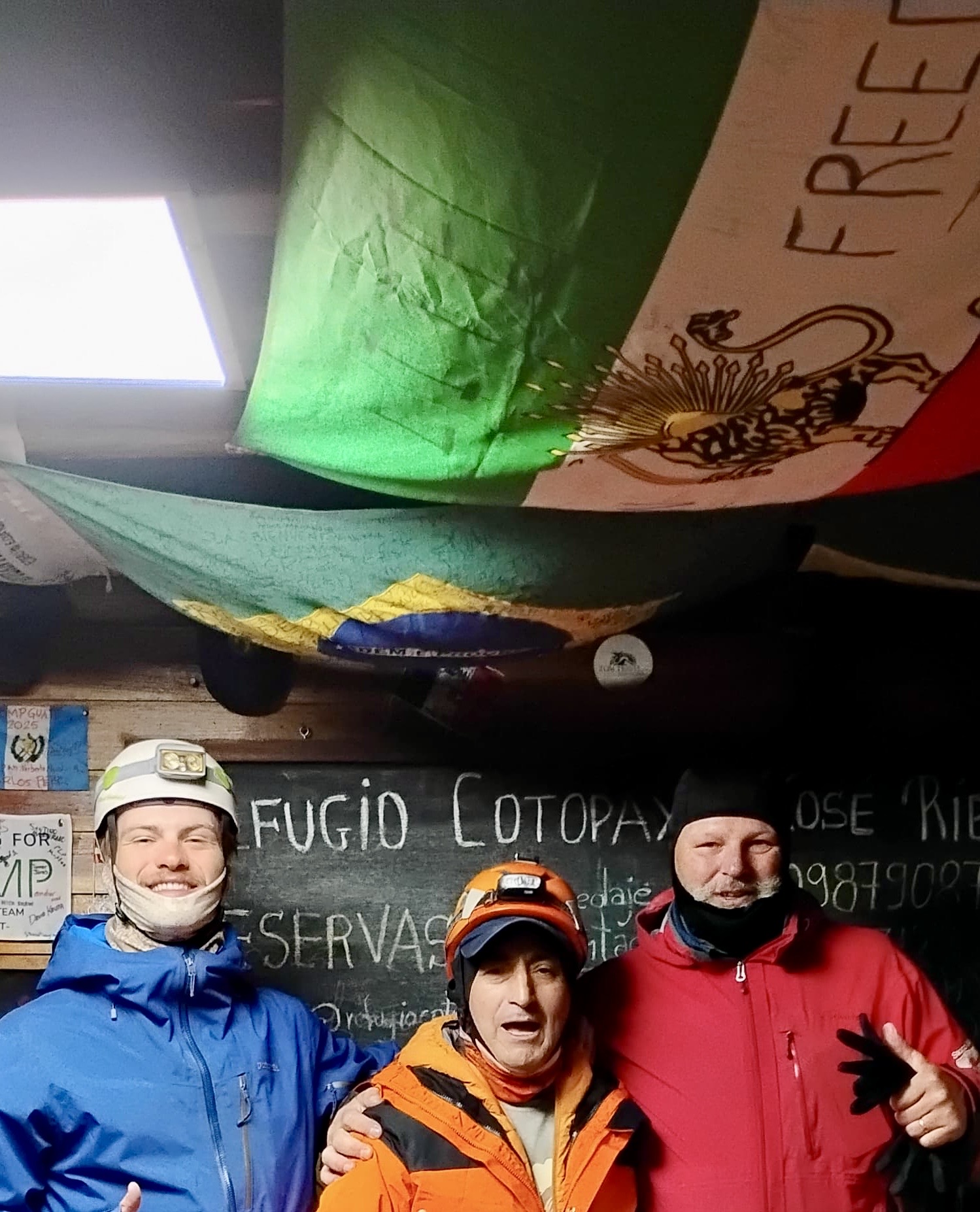
Tomorrow we begin our next objective: a two-day climb of Cotopaxi, one of the world's highest active volcanoes and one of Ecuador's most iconic summits.
Everything up to this point has been building toward that challenge.
The acclimatization hikes.
The time spent exploring Quito.
The days adjusting to the altitude.
The climb of Iliniza Norte.
Now it's time to see what happens on Cotopaxi.
Thanks for following along with our Ecuador adventure. The mountains are getting bigger, the air is getting thinner, and the adventure is only getting started.
Stay tuned for the next update from the Andes.
Adventure is out there. We're just fortunate enough to be chasing it.
.png)