.svg)

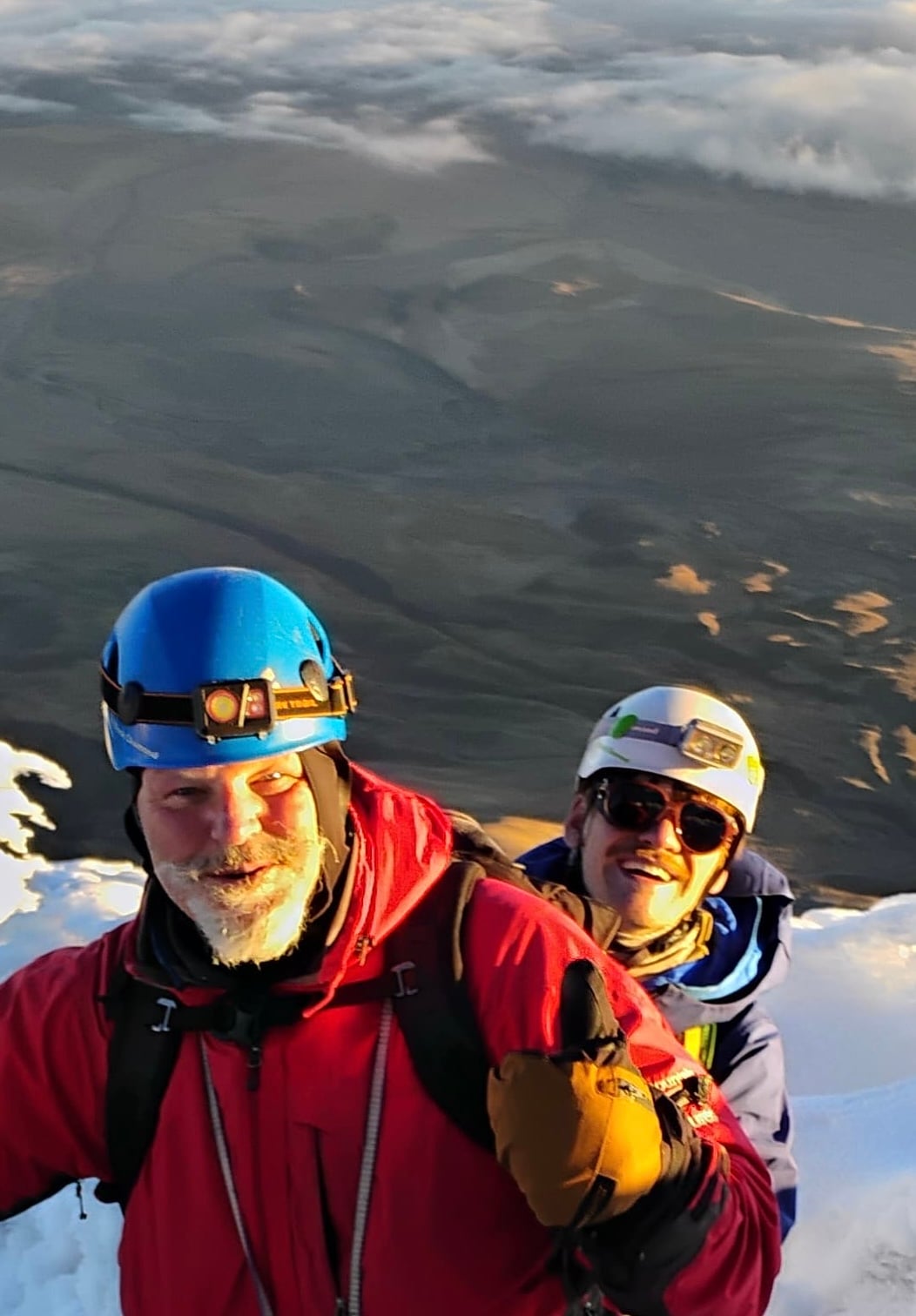
When Wyatt and I began planning this adventure months ago, Cotopaxi was the mountain that always lingered in the background.
Every training hike, every early morning workout, every acclimatization climb in Ecuador ultimately pointed toward one objective: standing together on the summit of one of the world's highest active volcanoes.
On Tuesday, 10/13/26 that objective suddenly became very real.
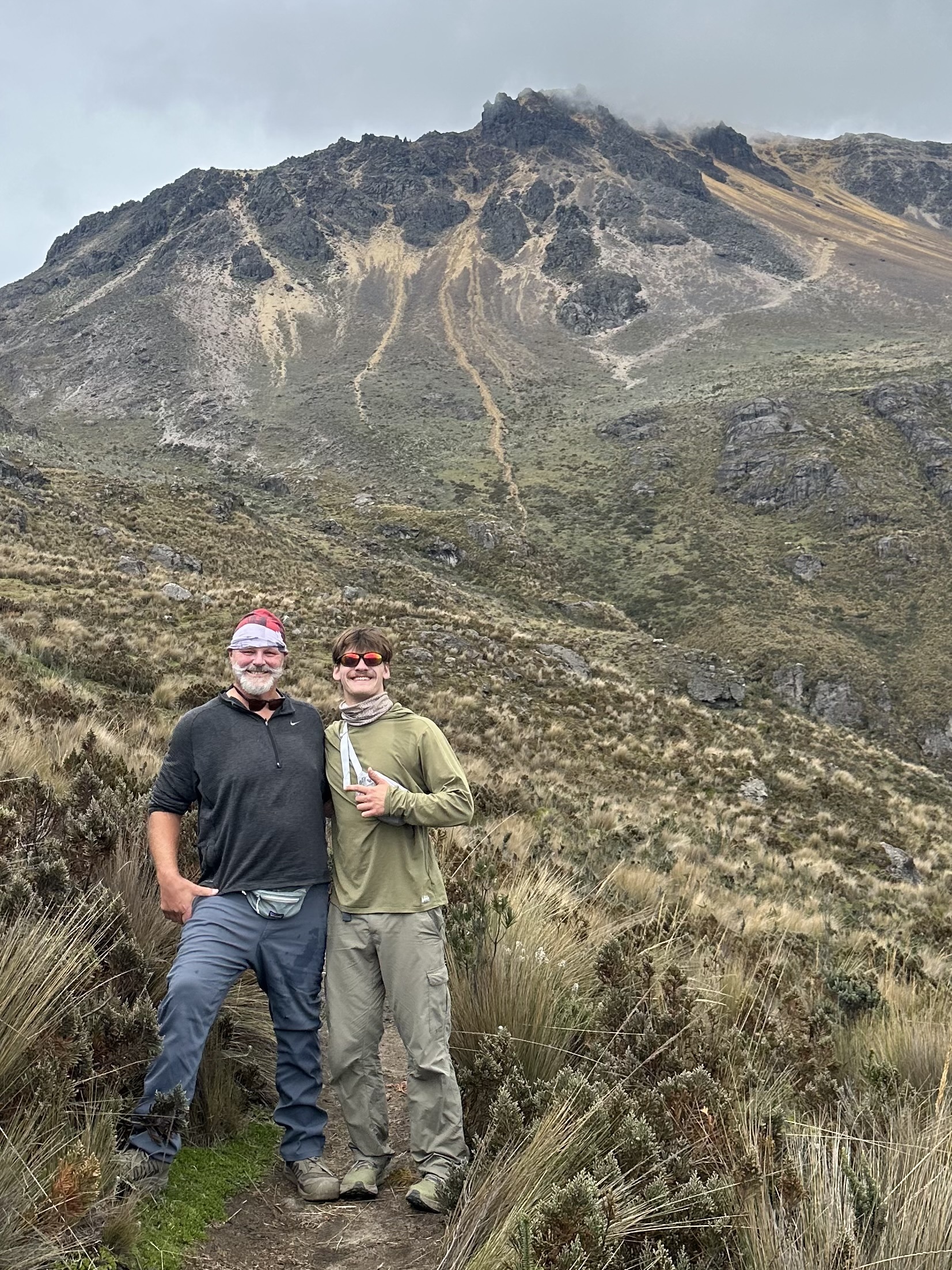
After a slow morning organizing gear in Latacunga, we met our guide, Julián, loaded crampons, gaiters, ice axes, and helmets into the truck, and headed toward Cotopaxi National Park. An hour and a half later, after bouncing along rough Ecuadorian roads, we arrived at the trailhead and began the short but steep hike to Refugio José Ribas.
Perched at nearly 16,000 feet, the refuge has served as the launching point for Cotopaxi climbers for more than fifty years. Thousands of mountaineers have passed through its doors on their way to the summit, and for one night, Wyatt and I became part of that tradition.




-Aug-08-2026-08-15-34-0507-PM.jpg)
-Aug-05-2026-10-03-15-0537-PM.jpg)
-4.jpg)
-Jul-25-2026-06-04-44-8518-PM.jpg)
-2.jpg)
.jpeg)
-2.jpg)
.png)